
The Question – What do we do with our buildings?

We recently watched the great cathedral of Notre Dame burn, a moment when you have to really pinch yourself as you watched what looked to be the end of the cathedral. But, it poses a question how do we protect our historic buildings for future generations and what does it say about us?
Many of these country houses were built as a statement of wealth, with all the grandeur of these buildings they show us how we used to live, well the rich. They also show us how we lived and what was important to the builders and the people who built them for there needs, but as we move into the 21st century we face questions about both their purpose and how to look after them.
Since WWII many stately homes have been forced to open up as the cost of maintenance and death taxes has risen. Longleat is a good example, the sixth Marquess of Bath opened the house up to help look after the house and gardens. Longleat has become a much bigger business as it has many other attractions, all with the aim of making the buildings pay for themselves.
Most of our buildings built in the past 300 years are beginning to crumble, the Place of Westminster is a good example, we know the building needs billions of pounds to repair and restore the building. It is a complicated building, miles of tiny corridors wiring which means any fire, if it took hold, could spread rapidly.
Westminster is a good example of what adaptions are needed, as we have developed new technology like electrics, heating and broadband, we have added to the buildings more risk of damage from fire and water. The fact we have done this also creates the problems of fire.
But how can you compare the damage of Notre Dame to Grenfell? Like as we watched Notre Dame burn the horror unfolding at Grenfell Tower where seventy-two people died and two hundred and fifty-five made homeless?

Grenfell was another fire, partly caused by renovation although the full report isn’t due out until the conclusion of a public inquiry. But Grenfell is an example of what can go wrong when we try to look after buildings and do it goes horribly wrong.
Many smaller churches have been forced to diversify to look after these buildings. But, many of these rural churches I have stumbled across seem to be abandoned, we must avoid our newer buildings falling into disrepair like these medieval castles.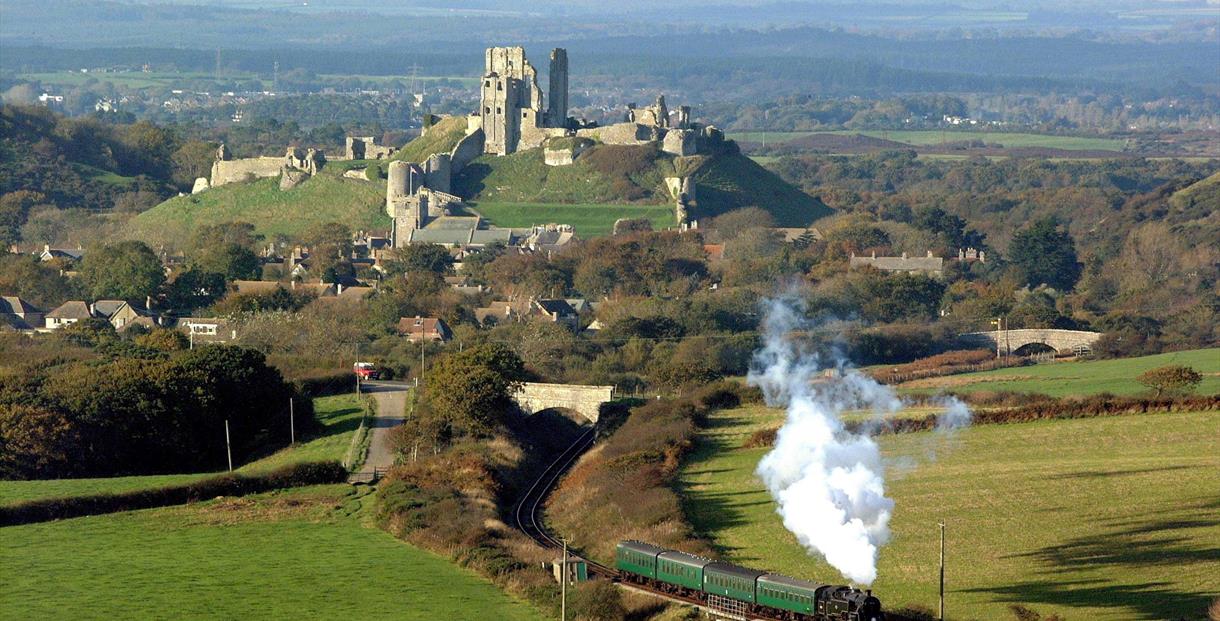
Corfe Castle, fell into disrepair following the Civil War these remains have been maintained in the late nineteenth century and ever since. I believe its highly unlikely that any building would fall down or be left now, but you need to understand that it is possible.
There will never be an off the shelve model to look after these buildings, but we need to find the right ways. Houses, churches all need to reinvent themselves over time but this needs to be done within the way of protecting the heritage.
Some buildings have built new purposes into them, we can learn from our past. Even our grand stately homes have been knocked down, had bits added and altered, I’m not saying let’s knock down parts of old buildings and adapt them for our modern uses within reason.
At many of these stately homes and castles, the stables or outbuildings have been converted into shops and cafes. As well as the things we need such as toilets and refreshment places, they have needed to build and adapt these buildings.
Our buildings and what should be protected can cause debate with modern buildings. I live near a protected industrial unit, this surprised me as it looked like another factory, the reason why the building is protected is because it was the first building in Britain to use Mero space frame technology, one of the first widely commercially available space grid systems invented in Germany in the 1940s.
But that poses a question for my generation and for the future, what building of our grandparents and parents era. Ten years ago, I remember in Bath there was a big debate when Bath was developing its main shopping centre and to do that they wanted to demolish Churchill House.

The building was built in the neo-classical style and housed … the plan to demolish the former building got support from Grand Designs presenter Kevin McCloud.
“They are both part of Bath’s history. There is a lot of vanity at work here, the vanity of politicians, architects, developers.”
“They all want to create things that stand out and say, ‘Look at me’. I am making a plea for forgotten buildings. They all have a historic value. If you remove them you are slowly unpicking history.”
Historic buildings need a purpose, they cannot sit idle waiting to be developed these don’t need to become abandoned just there because an eyesore and unloved. I believe that reusing old buildings turning them into homes and businesses is the best way to look after them.
This, however, should not be done for buildings of national importance, but for the houses near towns, old disused churches and warehouses. These buildings old buildings can also be reinvented, into community spaces cafes, arts venues and places to hire.
If I owned a big building in the middle or near a town what would I do? If it was an old manor house and I had the money I would open the gardens up make it a retreat from the town have the house open at certain times. If it was industrial buildings in a town, I think we need uses for these buildings as a creative hub.
In these hubs, I would put small tech companies, local small retailers, artists and embed community enterprise projects, schools and universities.
Our old buildings regardless of being museums, churches, venues or places for startups can become the centre of our communities. A place for people and to celebrate as weddings, birthdays and parties can be made by the venue, we remember buildings.
There is no one size fits all answers… but our buildings new and old are designed with care for purpose, for life and the future. Look at our great buildings, it is the people
[…] this month, The Question was prompted by Notre Dame, as mentioned in last month’s edition. But thinking about the post, […]
[…] The Question – What do we do with our buildings? […]